
Inflation
ZAMBIA INFLATION KEY FIGURES, AUGUST 2026
| Annual Inflation, Aug 2026 | Monthly Inflation, Aug 2026 | BOZ Target Band | Monetary Policy Rate |
|---|---|---|---|
| 6.2% | 0.2% | 6-8% | 13.25% |
Zambia’s annual inflation rate eased to 6.2% in August 2026, down from 6.5% in July, comfortably inside the Bank of Zambia’s 6-8% target band and continuing a sharp disinflation from the 16.7% peak reached in December 2024.
Monthly inflation held at 0.2% for a second straight month in August 2026, with food prices driven by fruits, vegetables and dairy while non-food inflation reflected pharmaceutical products and fuel prices, as the Bank of Zambia’s Monetary Policy Committee has begun cutting interest rates on the back of the improving price outlook.
Recent Inflation Trend
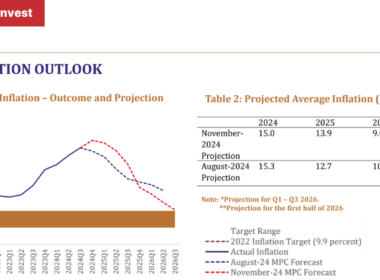
Annual inflation fell to 6.2% in August 2026, down from 6.5% in July, meaning prices of goods and services on average rose 6.2% between August 2025 and August 2026[1]. That places inflation comfortably within the Bank of Zambia’s 6-8% target band, extending a disinflation that has been underway since a peak of 16.7% in December 2024, as inflation was trending down toward the target band at the time of the 2026 Budget Speech[3]. Inflation averaged 11.3% in the fourth quarter of 2025 and 8.0% in the first quarter of 2026, before easing to 7.1% in March, 6.8% in April and further through the following months to August’s 6.2%[2]. The disinflation has been driven mainly by base effects from maize grain and related products and by the sharp appreciation of the Kwacha against the US dollar, detailed on the dedicated Economy page[2].
Monthly Price Movements
The overall monthly inflation rate held at 0.2% in August 2026, unchanged from July[1]. Monthly food inflation rose to 0.2% in August from 0.1% in July, driven mainly by price movements in fruits including lemons, bananas, watermelon and avocados, vegetables including cassava leaves, okra, cucumber, green pepper and maize cobs, and fresh milk and eggs[1]. Monthly non-food inflation eased to 0.2% in August from 0.3% in July, driven by pharmaceutical products including ampicillin, aspirin and cough remedies, fuels and lubricants including diesel, petrol and engine oil, and general service and repair charges[1].
Monetary Policy Response
The Bank of Zambia now projects average inflation of 6.8% for full-year 2026 and 6.1% for 2027, both revised down from its February 2026 forecasts of 6.9% and 6.7% respectively[2]. At its May 11 to 12, 2026 meeting, the Monetary Policy Committee cut the Monetary Policy Rate by 25 basis points to 13.25%, citing the favourable maize harvest outlook and the relative stability of the Kwacha, while flagging the Middle East conflict as an upside risk to prices that warranted a cautious pace of easing[2].
Investment Opportunities
Inflation settling back inside the Bank of Zambia’s target band, alongside a Monetary Policy Committee already cutting rates, points toward a lower and more stable domestic borrowing cost environment than Zambia has had since before the 2024 drought, relevant to any business planning Kwacha-denominated financing[2]. The specific commodities driving monthly food and non-food inflation, from fuel and pharmaceuticals to fresh produce, also mark out where price pressure or relief is concentrated for any investor exposed to Zambian consumer demand[1].
Last Update: September 2026